

North America Isoxazoline Drugs Market
North America Isoxazoline Drugs Market Share and Trend Analysis, By Formulation (Oral Formulations, Topical Formulations), By Application (Flea and Tick Control, Mite Infestations, Broad-Spectrum Parasitic Control), By End User (Veterinary Clinics, Pet Owners, Animal Hospitals – Industry Analysis Report, Regional Outlook, Growth Potential, Price Trends, Competitive Market Share & Forecast, 2026–2033

Historical Period: 2019-2024
Forecast Period: 2025-2033
Report Code :
CAGR: 7.6%
Last Updated : July 24, 2025
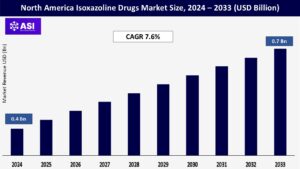
The North America Isoxazoline Drugs market was valued at USD 0.4 billion in 2024 and is projected to reach USD 0.7 billion by 2033, growing at a CAGR of 7.6% during the forecast period (2025–2033).
The treatment of external parasites in companion animals, especially dogs and cats, has been completely transformed by isoxazoline medications, a new class of ectoparasiticides. These substances work by specifically blocking L-glutamate-gated and gamma-aminobutyric acid (GABA)-gated chloride channels in invertebrate nervous systems, which causes unchecked neuronal activity, paralysis, and ultimately the parasites’ demise. Notably, isoxazolines have good safety profiles because they are highly selective for parasite receptors compared to mammalian ones. Afoxolaner, fluralaner, sarolaner, and lotilaner are among the isoxazoline-based products that have been approved by regulatory agencies like the U.S. Food and Drug Administration (FDA). These products come in a variety of formulations, including topical solutions and oral chewable tablets, giving pet owners flexible administration options.
With some formulations providing protection for up to 12 weeks, these medications offer quick and long-lasting effectiveness against a variety of ectoparasites, such as fleas, ticks, and mites. Isoxazolines are widely used in veterinary practice throughout North America due to their efficiency and convenience. Though usually well tolerated, the FDA and other organizations have issued advisories due to the infrequent reports of neurological side effects, including muscle tremors and seizures, in certain animals. Notwithstanding these reservations, the need for isoxazoline medications is still rising due to rising pet ownership, increased knowledge of pet health, and the continuous requirement for efficient parasite control methods.
The market for isoxazoline medications in North America is expanding significantly, mostly due to the growing popularity of pet ownership and the humanization of animals. About 70% of American households own a pet, which translates to about 90 million dogs and 94 million cats in the nation alone, according to the American Pet Products Association (APPA). As pet ownership has increased, people’s perceptions of pets have changed as well; many pet owners now view their animals as essential members of the family. As a result, there is a greater emphasis on the health and welfare of pets, which raises the need for efficient veterinary care and preventative measures.
Veterinarians and pet owners now favour isoxazoline medications because of their effectiveness in managing ectoparasites like fleas and ticks. The long-lasting effects and ease of administration, whether via topical solutions or oral tablets, increase user satisfaction and compliance. Additionally, pet owners can now conveniently buy medications thanks to the growth of e-commerce platforms, which have made these products more accessible. This trend was also influenced by the COVID-19 pandemic, as lockdowns boosted pet adoptions, which in turn raised demand for efficient parasite control measures. In conclusion, the convenience of isoxazoline medication formulations, rising awareness of preventive care, and rising pet ownership are all driving the market in North America.
The market for isoxazoline medications in North America is being significantly driven by the growth of e-commerce and online veterinary services. The COVID-19 pandemic has accelerated the trend of pet owners favoring online medication purchases due to their convenience. Customers can now more easily obtain isoxazoline medications thanks to online platforms, which also frequently offer home delivery as an extra perk. This change not only makes things more convenient for customers, but it also gives manufacturers and retailers a wider audience to serve.
Veterinarians can now prescribe and recommend treatments remotely without in-person visits thanks to the growth of telemedicine in veterinary care. Pet owners in isolated or underprivileged areas have benefited greatly from this development, which guarantees that they can obtain essential medications such as isoxazoline drugs. Digital platform integration in the supply chain for veterinary pharmaceuticals has enhanced inventory control, expedited the purchasing process, and yielded insightful data about consumer behavior. The e-commerce channel is anticipated to become more and more important in the distribution and sales of isoxazoline medications in North America as digital adoption keeps growing.
The North American market is severely constrained by regulatory issues and safety concerns, even though isoxazoline medications are effective in controlling ectoparasites in companion animals. Bravecto, Nexgard, Simparica, and Credelio are among the isoxazoline-class medications for which the U.S. Food and Drug Administration (FDA) has issued warnings about possible neurologic side effects. Muscle tremors, ataxia, and seizures in certain dogs and cats are among the reported side effects. The FDA has ordered manufacturers to update product labeling to emphasize these possible neurologic risks, even though these products have been found to be safe and effective for the majority of animals.
Such regulatory actions can result in heightened scrutiny from pet owners and veterinarians and require strict post-marketing surveillance. Increased knowledge of possible adverse effects could affect consumer confidence and prescribing practices, which could have an effect on market expansion. Manufacturers must also invest in thorough safety assessments and compliance measures due to the strict regulatory environment, which could raise operating costs and have an impact on profit margins. Together, these elements present obstacles to market growth and highlight the significance of ongoing observation and open communication about product safety.
| Report Metric | Details |
|---|---|
| Segmentations | |
| By Formulation |
Oral Formulations Topical Formulations |
| By Application |
Flea and Tick Control Mite Infestations Broad-Spectrum Parasitic Control |
| By End User |
Veterinary Clinics Pet Owners Animal Hospitals |
| Key Players |
|
| Geographies Covered | |
| North America |
U.S. |
The two main categories of formulations in the North American market for isoxazoline drugs are topical and oral. Chewable tablets and other oral formulations have become increasingly popular because of their systemic efficacy and ease of administration. Products that provide convenient monthly dosing, such as NexGard (afoxolaner) and Simparica (sarolaner), guarantee thorough protection against fleas and ticks. Pet owners prefer these oral treatments because of their palatability and lower chance of external contamination. However, for pets who might have trouble swallowing oral medications, topical formulations such as spot-on treatments like Bravecto (fluralaner) offer an alternative.
Extended protection is provided by topical applications; some products maintain their effectiveness for up to 12 weeks. They might, however, be vulnerable to being eliminated or washed away by grooming practices. The decision between topical and oral formulations is frequently influenced by owner preference, pet behavior, and particular health concerns. In order to meet the various needs of North America’s pet owners, manufacturers are constantly innovating in both formulation types to improve efficacy, safety, and user convenience.
In North America, isoxazoline medications are mostly used to prevent and treat ectoparasitic infestations in companion animals, particularly those caused by fleas and ticks. In addition to being uncomfortable, these infestations run the risk of spreading illnesses like ehrlichiosis and Lyme disease. Fluralaner, afoxolaner, sarolaner, and lotilaner are examples of isoxazoline compounds that work by blocking particular neural pathways in parasites, which causes them to be eliminated. These medications’ effectiveness goes beyond just controlling parasites right away; fluralaner, for example, has been shown to interfere with flea reproduction cycles, offering long-term protection.
Isoxazoline’s broad-spectrum action reduces the need for combination treatments by effectively combating a variety of parasite species. Their quick start and long-lasting effectiveness help pet owners be more compliant. The need for practical and efficient treatment options, such as isoxazoline medications, is increasing as more people become aware of the health hazards connected to parasite infestations. In order to preserve animal health and stop the spread of zoonotic diseases, veterinarians frequently suggest these drugs as a component of all-encompassing parasite control programs.
Veterinary clinics, pet owners, and animal hospitals are all included in the end-user segment of the North American market for isoxazoline drugs. By using their knowledge to customize parasite control plans to meet the needs of specific animals, veterinary clinics are essential in the prescription and administration of isoxazoline treatments. They act as reliable information sources, advising pet owners on how to use these drugs. Pet owners are important end users who are becoming more concerned about the health of their animals. They frequently buy isoxazoline products over-the-counter or through recommendations from veterinarians. The ongoing need for these medications is a result of their increased understanding of the significance of routine parasite prevention.
When handling more complicated cases, animal hospitals use isoxazoline treatments as part of all-encompassing care plans, particularly for animals that need to be hospitalized or have severe infestations. These end users’ combined involvement highlights North America’s integrated approach to parasite control, where knowledgeable pet ownership and expert advice combine to improve animal health outcomes. In order to ensure the efficient use of isoxazoline medications in a variety of care settings, manufacturers and distributors concentrate on assisting these end users through educational programs and easily accessible product offerings.
Due to widespread pet ownership and high healthcare spending (more than $100 billion in 2020), the United States leads the North American isoxazoline market. The demand for efficient parasiticides like Bravecto and NexGard, which are easily accessible through veterinary clinics and internet retailers and are backed by a strong pet healthcare system, is driven by high awareness and the frequency of tick-borne illnesses.
Growing pet ownership and increased awareness of pet health issues are driving market expansion in Canada. The need for effective flea and tick control is rising as a result of this trend. The broad-spectrum efficacy and user-friendliness of isoxazoline medications make them popular. Accessibility and consumer confidence in veterinary products are further improved by the country’s robust regulatory environment and the expansion of online retail channels.
The north america isoxazoline drug market was valued at USD 0.4 billion in 2024.
The north america isoxazoline drug market is projected to grow at a CAGR of 7.5 % from 2025 to 2033.
The Oral hold the largest north america isoxazoline drug market share.
The north america isoxazoline drug market major players include Merck, Elanco, Boehringer.
1.1 Summary
1.2 Research methodology
2.1 Research Objectives
2.2 Market Definition
2.3 Limitations & Assumptions
2.4 Market Scope & Segmentation
2.5 Currency & Pricing Considered
3.1 Drivers
3.2 Geopolitical Impact
3.3 Human Factors
3.4 Technology Factors
4.1 Porters Five Forces Analysis
4.2 Value Chain Analysis
4.3 Average Pricing Analysis
4.4 M & A, Agreements & Collaboration Analysis
6.1 North America Aesthetic Medicine Market, By Country
6.1.1 North America Isoxazoline Drugs Market, By Formulation
6.1.2 North America Isoxazoline Drugs Market, By Application
6.1.3 North America Isoxazoline Drugs Market, By End-User
6.2 U.S.
6.2.1 North America Isoxazoline Drugs Market, By Formulation
6.2.2 North America Isoxazoline Drugs Market, By Application
6.2.3 North America Isoxazoline Drugs Market, By End-User
6.3 Canada
11.1 Global Market Share (%) By Players
11.2 Market Ranking By Revenue for Players
11.3 Competitive Dashboard
11.4 Product Mapping