

Dermatological Drug Market
Dermatological Drug Market Share & Trends Analysis Report, By Dermatological Diseases (Psoriasis (often identified as the largest segment), Acne, Dermatitis (e.g., Atopic Dermatitis/Eczema), Skin Cancer, Rosacea, Alopecia, Others), By Route of Administration (Parenteral (injectables, often holding the largest market share due to biologics), Topical (creams, ointments, gels, sprays), Oral) By Drug Class (Biologics, Corticosteroids, Retinoids, Calcineurin Inhibitors, Antihistamines, Antibiotics, Antifungal Agents, Others (e.g., JAK inhibitors, photodynamic therapy agents)), By Distribution Channel (Hospital Pharmacies (dominant channel), Retail Pharmacies, Online Pharmacies) – Industry Analysis Report, Regional Outlook, Growth Potential, Price Trends, Competitive Market Share & Forecast, 2025–2033

Historical Period: 2019-2024
Forecast Period: 2025-2033
Report Code :
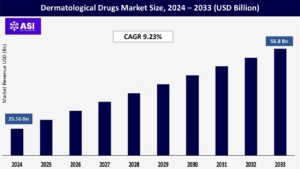
CAGR: 9.23%
Last Updated : March 17, 2026
The dermatological drug market was valued at approximately USD 25.56 billion and is projected to reach USD 56.8 billion by 2033, demonstrating a compound annual growth rate (CAGR) of 9.23% during the forecast period of 2025-2033.
The dermatological drugs market is expected to grow rapidly in the coming years, particularly between 2025 and 2033. This growth is being driven by a mix of factors: more people are paying attention to their skin health, technology is making treatments more effective, and the number of individuals affected by skin conditions continues to rise worldwide. Together, these trends are shaping a strong future for the market.
Skin conditions are becoming increasingly common around the world. From chronic issues like psoriasis, eczema, and rosacea to everyday problems like acne, fungal infections, and even skin cancer, more people are seeking help for these concerns. Environmental factors such as pollution, excessive sun exposure, and lifestyle habits like stress and poor diet are only making matters worse. On top of that, as the global population ages, more individuals are experiencing age-related skin problems, driving up the need for effective dermatological treatments.
The way we treat skin diseases is rapidly evolving, thanks to breakthroughs in science and technology. Biologics such as monoclonal antibodies are transforming care for chronic conditions like psoriasis, eczema, and hidradenitis suppurativa. These targeted therapies are more precise and effective, often with fewer side effects than traditional treatments. At the same time, the arrival of biosimilars (more affordable versions of existing biologic drugs) is making these advanced treatments accessible to more people, increasing competition and lowering costs. Innovations in drug delivery like transdermal patches, nanotechnology, and microneedles are improving how medications work, helping patients stay consistent with treatment while minimizing side effects.
There’s also a growing shift toward personalized medicine, where treatments are tailored to a person’s unique genetics, environment, and lifestyle. This leads to better results and more targeted care. Lastly, technology is playing a bigger role than ever. Artificial intelligence and digital health tools are being used in everything from diagnosing skin conditions to designing personalized treatment plans. With telemedicine on the rise, more people can now consult dermatologists from the comfort of their homes making care more convenient and widely available.
Bringing new dermatological drugs to market isn’t easy it’s a long, expensive, and highly regulated process. Companies must go through rigorous clinical trials to prove that their treatments are both safe and effective, especially when it comes to children. Agencies like the FDA and EMA have strict requirements, which often extend development timelines and significantly increase research costs. Formulating topical treatments (like creams or gels) also comes with its own set of challenges.
Developers need to ensure that the drug properly penetrates the skin, delivers the right amount of medication, and works consistently. Creating generic versions can be tricky, too, especially without clear testing standards or reliable markers to measure effectiveness. On top of that, there’s still a lot we don’t fully understand about the biology behind many complex skin conditions. Without a clear understanding of what causes these diseases at a cellular level, it becomes harder to discover new drug targets and create treatments that work well for everyone.
One of the biggest challenges in dermatology is managing side effects. Many powerful skin treatments, especially oral medications and biologics, can come with risks. While some people may only experience mild irritation, others might face more serious health issues. These potential side effects can make patients hesitant to start or stick with treatment. In fact, the U.S. FDA has even issued warnings about certain over-the-counter (OTC) skin products due to the risk of allergic reactions. Another concern is how people use these products.
When dermatological treatments, especially OTC ones, are used incorrectly or too frequently, they can do more harm than good. Misuse not only reduces their effectiveness but can also lead to unwanted reactions, discouraging people from using them again or recommending them to others. Proper guidance and education are essential to ensure safe and successful treatment outcomes.
| Report Metric | Details |
|---|---|
| Segmentations | |
| By Dermatological Diseases |
Psoriasis (often identified as the largest segment) Acne Dermatitis (e.g., Atopic Dermatitis/Eczema) Skin Cancer Rosacea Alopecia Others |
| By Route of Administration |
Parenteral (injectables, often holding the largest market share due to biologics) Topical (creams, ointments, gels, sprays) Oral |
| By Drug Class |
Biologics Corticosteroids Retinoids Calcineurin Inhibitors Antihistamines Antibiotics Antifungal Agents Others (e.g., JAK inhibitors, photodynamic therapy agents) |
| By Distribution Channel |
Hospital Pharmacies (often holding the largest share, especially for severe cases) Retail Pharmacies Online Pharmaciesa |
| Key Players |
AbbVie Inc. Amgen Inc. Bausch Health Companies Inc. Bristol-Myers Squibb Company Eli Lilly and Company GSK plc LEO Pharma A/S (LEO Holding A/S) Novartis AG Pfizer Inc. Sanofi S.A. Galderma Johnson & Johnson Services Inc. Sun Pharmaceutical Industries Ltd. Almirall, S.A. Incyte Corporation Glenmark Organon International |
| Geographies Covered | |
| North America |
U.S. |
| Europe |
U.K. |
| Asia Pacific |
China |
| Middle East & Africa |
Saudi Arabia |
| Latin America |
Brazil |
The Dermatological Drugs Market is categorized by dermatological disease type, by route of administration, by drug class, and by distribution channel. The market for dermatological drugs is steadily gaining momentum as more people around the world seek effective solutions for skin-related issues. From common conditions like acne and eczema to more complex disorders like psoriasis and skin cancer, the demand for targeted treatments is rising.
At the same time, growing awareness around skin health, fueled by both medical guidance and lifestyle choices, is pushing more individuals to seek professional care. With ongoing innovations in drug formulations and delivery methods, the dermatology space is evolving rapidly, making it an increasingly vital part of the broader pharmaceutical industry.
Psoriasis continues to lead the dermatological drug market, largely because it’s a long-term condition that affects millions of people worldwide. Managing its chronic symptoms often requires ongoing treatment, and there’s growing interest in newer, more effective therapies, especially biologics that offer better relief and control.
Acne remains a major concern, particularly among teenagers and young adults. As awareness around skincare grows, so does the demand for fast-acting, reliable treatments that can help people manage breakouts and boost their confidence. Dermatitis, including conditions like eczema and atopic dermatitis, is seeing a rise in cases, partly due to environmental factors and increased allergies. With more people experiencing these irritating and sometimes painful flare-ups, the need for effective treatment options continues to grow. Skin cancer is gaining more attention as awareness efforts improve. Early detection and treatment are critical, which is fueling the market for therapies aimed at addressing different types of skin cancers. Rosacea, known for causing persistent facial redness and visible veins, is another chronic condition prompting patients to seek consistent relief.
As more people look for ways to manage the condition, demand for targeted treatments is increasing. Alopecia, or hair loss, is becoming a rising concern not just for older adults, but also for younger individuals. As conversations about hair health become more mainstream, the market for hair regrowth and maintenance therapies is expanding quickly. Other conditions, such as fungal infections (like athlete’s foot or ringworm), vitiligo, and rare disorders like ichthyosis, also contribute to the overall market. While these may be less talked about, they still impact quality of life and drive steady demand for specialized dermatological solutions.
Topical treatments are the most commonly used approach in dermatology and for good reason. Whether it’s a cream, gel, ointment, lotion, or even a medicated patch, these treatments are applied directly to the skin, right where the problem is. This means they can work more precisely with fewer whole-body side effects, making them a go-to option for many skin conditions. Oral medications, taken in the form of pills or capsules, are often used when skin conditions are more widespread or severe. These treatments work from the inside out, offering systemic relief when topical options aren’t enough on their own. Injectable treatments, also known as parenteral administration, are becoming more prominent, especially with the rise of biologic drugs.
These injections (given under the skin, into a muscle, or directly into a vein) are designed to act quickly and effectively, often providing life-changing relief for people with chronic or complex skin diseases like psoriasis or eczema. As biologics become more advanced and accessible, this method of treatment is gaining traction across the industry.
Corticosteroids remain a cornerstone in dermatological treatment. Known for their ability to quickly calm inflammation, they’re widely used to manage everything from eczema and psoriasis to various types of dermatitis. Their broad effectiveness makes them a go-to option for doctors and patients alike. Anti-inflammatory and antipruritic drugs are essential for tackling the two things people with skin conditions often struggle with most: inflammation and itching. These treatments help provide much-needed relief and improve daily comfort. Anti-infective and antibacterial medications play a critical role when it comes to treating skin infections caused by bacteria. Whether it’s impetigo or an infected wound, these drugs help stop the spread and promote healing.
Antifungal drugs are in high demand, especially with the increasing cases of fungal skin infections like ringworm and athlete’s foot. As awareness and diagnoses grow, this segment is expected to expand rapidly. Retinoids are a familiar name in dermatology, particularly for acne treatment. They’re also effective for conditions like psoriasis and are often prescribed when other options don’t do the trick. Their ability to renew skin cells and improve texture makes them especially popular. Calcineurin inhibitors are another option for inflammatory conditions, especially atopic dermatitis. Unlike steroids, they don’t thin the skin, which makes them a valuable alternative for long-term use in sensitive areas like the face or eyelids.
Biologics represent one of the most exciting advancements in skin therapy. Designed to target specific parts of the immune system, these treatments are changing lives for people with severe or chronic skin diseases like psoriasis and eczema. With fewer side effects and more targeted action, biologics are rapidly gaining popularity and reshaping the future of dermatological care.
Hospital pharmacies play a leading role in the dermatological drug market. Many advanced treatments, especially biologics and other prescription-based therapies, are often started or closely monitored in hospital settings. This is because these drugs are typically used for more serious skin conditions that require expert supervision and personalized care. Retail pharmacies are a key part of everyday access to skin treatments. From over-the-counter creams for acne or rashes to commonly prescribed medications, these local pharmacies serve as the first stop for many people looking to manage skin concerns. As awareness around skincare and self-treatment continues to grow, so does the importance of retail outlets.
Online pharmacies are quickly gaining ground, thanks to the convenience they offer. With just a few clicks, consumers can access a wide variety of dermatological products, often with doorstep delivery and competitive pricing. As e-commerce becomes more integrated into healthcare, this channel is expected to see strong, sustained growth.
The dermatological drugs market isn’t the same everywhere it varies widely depending on where you are in the world. Things like how common certain skin conditions are, how developed the healthcare system is, and how aware people are about skin health all play a role. North America and Europe currently lead the way. These regions benefit from strong healthcare systems, widespread access to dermatologists, and a high number of people living with chronic skin conditions like psoriasis and eczema. Plus, there’s a strong focus on research and innovation, which keeps these markets at the forefront.
Meanwhile, the Asia-Pacific region is quickly becoming a major growth hub. With its large and growing population, rising healthcare investments, and increasing public awareness about skin health, this region is seeing a surge in demand for dermatological treatments. Latin America and the Middle East & Africa (MEA) are also on the rise, though at a more gradual pace. As healthcare infrastructure improves and more people gain access to medical care, these regions are starting to see real progress in addressing skin-related conditions and expanding the availability of treatments.
North America continues to lead the global dermatological drugs market, and it’s easy to see why. The region has a large number of people dealing with skin issues, conditions like acne, psoriasis, dermatitis, and even skin cancer are quite common. For instance, millions in the U.S. alone are affected by acne every year, making effective treatments a constant need.
One of North America’s biggest strengths is its advanced healthcare system. With a strong network of dermatologists, cutting-edge clinics, and access to the latest medical technologies, patients here often receive faster and more personalized care than in many other parts of the world. Another major driver is the heavy investment in research and development. Many of the world’s leading pharmaceutical companies are based in the U.S. and Canada, and they’re continuously developing new and improved therapies, especially innovative biologics and targeted treatments.
The region also benefits from high healthcare spending, meaning people are more likely to afford specialized treatments that might be out of reach elsewhere. Beyond medical treatment, there’s also a growing interest in aesthetic and cosmetic dermatology. From anti-aging solutions to skin rejuvenation, people in North America are increasingly turning to dermatological products and procedures to look and feel their best. The United States stands out as the biggest player in the region, followed by Canada and Mexico, all contributing to North America’s leadership in the global market.
Europe stands as the second-largest player in the global dermatological drugs market, with several factors fueling its steady growth. One key driver is the aging population. As people live longer, age-related skin issues, from dryness and thinning to more serious conditions like skin cancer, become more common, creating a consistent need for effective treatments. Europe also benefits from strong, well-funded healthcare systems.
Most countries in the region have universal or subsidized healthcare, which means patients have better access to both everyday dermatological care and specialized treatments. The region’s pharmaceutical industry is also very active in research and development. New drugs and advanced therapies are being introduced regularly, helping patients manage chronic skin conditions more effectively and with fewer side effects. Conditions like eczema and psoriasis are particularly common in Europe, increasing the demand for both traditional medications and cutting-edge solutions like biologics. This has made dermatological care a key focus area in many national health strategies. In addition, there’s a rising emphasis on skin health awareness.
From public health campaigns to an increase in dermatology consultations, more people are seeking timely care for both medical and cosmetic skin concerns. Among the top contributors in the region are Germany, France, the United Kingdom, Italy, and Spain with Germany often leading the pack in terms of revenue and innovation.
The Asia-Pacific region is quickly becoming the fastest-growing force in the global dermatological drugs market. With a perfect mix of a massive population and rising income levels, more people than ever are seeking medical and cosmetic solutions for their skin concerns. Several factors are fueling this rapid growth. For starters, skin conditions are becoming more common across the region. Pollution, changing lifestyles, and even genetics are leading to a noticeable rise in issues like acne, eczema, fungal infections, and pigmentation disorders. At the same time, healthcare infrastructure is improving. Governments and private healthcare providers are working to expand access, especially in fast-developing countries like India, Indonesia, and Vietnam.
Better hospitals, more dermatologists, and modern diagnostic tools are making it easier for people to get the care they need. People in the region are also becoming more aware of their skin health. From wanting clear, healthy skin to showing greater interest in aesthetic treatments, there’s a growing openness to seeking professional help and spending on it. Pharmaceutical companies are taking notice.
Many are ramping up efforts in the region through new product launches, local partnerships, and culturally tailored marketing strategies to better connect with diverse consumer needs. Also contributing to the boom is medical tourism. Countries like India, Thailand, and South Korea are becoming well-known destinations for affordable, high-quality dermatological treatments both medical and cosmetic. Leading the growth are China, Japan, India, South Korea, and Australia, with India expected to post some of the highest growth rates thanks to its large, youthful population and expanding access to care.
The Middle East and Africa (MEA) region is an emerging player in the global dermatological drugs market, showing steady growth as access to healthcare and awareness of skin health continue to improve. One of the key factors driving demand in this region is the rising prevalence of skin conditions. Hot, dry climates, sun exposure, and genetic predispositions all contribute to a wide range of dermatological issues, from pigmentation problems to chronic conditions like eczema and psoriasis. Healthcare infrastructure is evolving, especially in the Gulf Cooperation Council (GCC) countries like Saudi Arabia and the UAE, where governments are heavily investing in modern hospitals and specialized care.
As a result, more people are now able to seek diagnosis and treatment for skin problems that might have gone untreated in the past. As disposable incomes rise, especially in urban centers, there’s a noticeable shift toward not just treating skin conditions, but also investing in appearance and self-care. This has led to a growing interest in cosmetic and aesthetic dermatology, with services like skin rejuvenation, anti-aging treatments, and laser procedures becoming increasingly popular.
At the same time, awareness about skin health is growing, though it varies from country to country. In more developed markets like the UAE and Saudi Arabia, public education and access to information are improving rapidly, while other parts of the region are still catching up. Saudi Arabia, the UAE, and South Africa stand out as the key markets in the region, each showing strong momentum as the demand for both medical and cosmetic dermatological treatments rises.
The market was valued at USD 25.56 billion in 2024.
The market is projected to grow at a CAGR of 9.23% from 2025 to 2033.
The psoriasis segment holds the largest market share.
Asia-Pacific region is expected to witness the highest growth rate.
Major players include AbbVie Inc., Pfizer Inc., GSK plc, Novartis AG, Johnson & Johnson, and Bausch Health Companies Inc.
1.1 Summary
1.2 Research methodology
2.1 Research Objectives
2.2 Market Definition
2.3 Limitations & Assumptions
2.4 Market Scope & Segmentation
2.5 Currency & Pricing Considered
3.1 Drivers
3.2 Geopolitical Impact
3.3 Human Factors
3.4 Technology Factors
4.1 Porters Five Forces Analysis
4.2 Value Chain Analysis
4.3 Average Pricing Analysis
4.4 M & A, Agreements & Collaboration Analysis
5.1 Dermatological Drug Market, By Dermatological Disease Type
5.1.1 Introduction
5.1.2 Market Size & Forecast
5.2 Dermatological Drug Market, By Route of Administration
5.3 Dermatological Drug Market, By Drug Class
5.4 Dermatological Drug Market, By Distribution Channel
6.1 North America Dermatological Drug Market, By Country
6.1.1 Dermatological Drug Market, By Dermatological Disease Type
6.1.2 Dermatological Drug Market, By Route of Administration
6.1.3 Dermatological Drug Market, By Drug Class
6.1.4 Dermatological Drug Market, By Distribution Channel
6.2 U.S.
6.2.1 Dermatological Drug Market, By Dermatological Disease Type
6.2.2 Dermatological Drug Market, By Route of Administration
6.2.3 Dermatological Drug Market, By Drug Class
6.2.4 Dermatological Drug Market, By Distribution Channel
6.3 Canada
7.1 U.K.
7.2 Germany
7.3 France
7.4 Spain
7.5 Italy
7.6 Russia
7.7 Nordic
7.8 Benelux
7.9 The Rest of Europe
8.1 China
8.2 South Korea
8.3 Japan
8.4 India
8.5 Australia
8.6 Taiwan
8.7 South East Asia
8.8 The Rest of Asia-Pacific
9.1 UAE
9.2 Turkey
9.3 Saudi Arabia
9.4 South Africa
9.5 Egypt
9.6 Nigeria
9.7 Rest of MEA
10.1 Brazil
10.2 Mexico
10.3 Argentina
10.4 Chile
10.5 Colombia
10.6 Rest of Latin America
11.1 Global Market Share (%) By Players
11.2 Market Ranking By Revenue for Players
11.3 Competitive Dashboard
11.4 Product Mapping