

Aesthetic Medicine Market
Aesthetic Medicine Market Share & Trends Analysis Report By Product (Facial Aesthetic, Body Contouring, Cosmetic Implants, Hair Removal, Skin Aesthetics, Tattoo Removal), By Procedure Type (Invasive Procedures, Non-Invasive Procedure), By End-User (Hospitals, Dermatology, Cosmetic Centers)– Industry Analysis Report, Regional Outlook, Growth Potential, Price Trends, Competitive Market Share & Forecast, 2025–2033

Historical Period: 2019-2024
Forecast Period: 2025-2033
Report Code :
CAGR: 12.10%
Last Updated : September 20, 2025
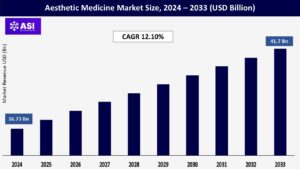
The global Aesthetic Medicine Market was valued at approximately USD 16.73 billion in 2024 and is projected to reach USD 41.7 billion by 2033, growing at a CAGR of 12.10% during the forecast period (2025–2033).
Medical aesthetics encompasses various non-surgical and minimally invasive treatments designed to improve physical appearance. Popular procedures include Botox, dermal fillers, laser treatments, and body contouring. The industry is experiencing significant growth, driven by a rising consumer emphasis on beauty and self-care, technological advancements that ensure safer and more efficient treatments, and the influence of social media in encouraging aesthetic enhancements.
Additionally, the market expansion is supported by an aging population seeking anti-aging solutions, increased disposable income enabling broader access to procedures, and growing acceptance of aesthetic treatments among men. Medical tourism also plays a key role, with individuals traveling internationally for more affordable and accessible services, further contributing to global demand.
The growing emphasis on physical appearance and beauty standards is a key factor propelling the Medical Aesthetics Market. Social media platforms, celebrity endorsements, and societal trends that prioritize youthfulness and attractiveness contribute to this surge. Many individuals now opt for non-invasive and minimally invasive procedures to refine their features, elevate self-confidence, and align with prevailing beauty norms. As a result, demand for treatments such as Botox, dermal fillers, and laser therapies has risen, driving the expansion of medical aesthetics products and services.
The Medical Aesthetics Market is undergoing a transformation thanks to advancements in non-invasive cosmetic technologies. Innovative treatments such as laser therapies, ultrasound-based skin tightening, and modern injectables like Botox and dermal fillers provide aesthetic improvements without requiring surgery.
These procedures offer faster recovery times, minimized risks, and more affordable options, making them accessible to a wider audience. Ongoing technological developments have enhanced the precision, safety, and effectiveness of these treatments, fueling their popularity and contributing to the growth of non-invasive aesthetic solutions.
Aesthetic procedures are included under private and government insurance plans; however, coverage varies. Treatments aimed at improving appearance, such as wrinkle reduction, fat removal, hair removal, tattoo removal, excess skin removal, and liposuction, typically do not qualify for reimbursement. On the other hand, certain medical procedures—such as facial reconstruction after an accident and weight loss surgery to address obesity-related health concerns—may be covered.
The proportion of surgeries performed for medical purposes is significantly lower than those conducted for aesthetic enhancement. Consequently, limited reimbursement options for most aesthetic treatments could hinder overall market growth.
Strict regulatory standards and safety considerations play a crucial role in shaping the Medical Aesthetics Market. Authorities establish comprehensive guidelines to maintain the safety and effectiveness of aesthetic treatments and devices, which can extend approval timelines and raise development expenses. While these regulations are vital for minimizing risks and safeguarding patients, they also pose challenges for new product entries into the market. Moreover, increasing consumer awareness about procedure safety fosters a demand for qualified professionals and reliable technologies, influencing market trends and growth opportunities.
| Report Metric | Details |
|---|---|
| Segmentations | |
| By Product Type |
Energy-based Aesthetic Device
Non-Energy-based Aesthetic Device
|
| By Procedure |
Skin Resurfacing and Tightening Body Contouring and Cellulite Reduction Facial Aesthetic Procedures Breast Augmentation Others
|
| By End User |
Hospitals Clinics and Beauty Centers Home Settings |
| Key Players |
|
| Geographies Covered | |
| North America |
U.S. |
| Europe |
U.K. |
| Asia Pacific |
China |
| Middle East & Africa |
Saudi Arabia |
| Latin America |
Brazil |
The Aesthetics Medicine Market is segmented by Product and by procedure and by end-user. Each segment plays a crucial role in improving diagnostic therapeutic technologies, and growing awareness of cosmetic procedures, and technological advancements.
Energy-based aesthetic devices play a crucial role in India’s medical aesthetics market, offering effective non-invasive solutions for skin tightening, hair removal, and body contouring. Advanced technologies such as lasers, radiofrequency, and ultrasound cater to the increasing demand for safe, efficient, and fast treatments. These devices are widely available in clinics and beauty centers, making them easily accessible. Their rising popularity is further driven by growing awareness, urbanization, and the influence of social media.
On the other hand, non-energy-based aesthetic devices hold a dominant position in the market due to their affordability and ease of use. These include treatments like dermal fillers, micro-needling, and injectables, which appeal to diverse demographics by addressing concerns such as facial rejuvenation and volume enhancement.
Their popularity is enhanced by their non-invasive nature, minimal recovery time, and increasing awareness of aesthetic procedures. The growing availability of these solutions in both professional clinics and home settings has contributed to their widespread adoption in India.
Skin resurfacing and tightening have become prominent segments in India’s medical aesthetics market, driven by increasing demand for anti-aging treatments and solutions for concerns like acne scars and pigmentation. Minimally invasive procedures utilizing technologies such as radiofrequency and lasers are favored for their effectiveness and fast recovery.
The accessibility of clinics, coupled with heightened awareness and affordability, has further contributed to their popularity. Urbanization, the influence of social media, and a growing emphasis on maintaining a youthful appearance continue to support the expansion of skin rejuvenation treatments. Body contouring and cellulite reduction are leading trends, fueled by increasing fitness awareness and the desire for well-defined physiques. Non-invasive fat reduction and skin-tightening technologies, including cryolipolysis and ultrasound, cater to diverse demographics seeking aesthetic enhancements without surgical intervention.
Additionally, social media trends and post-pregnancy body restoration contribute significantly to market growth, reinforcing the demand for these procedures. Facial aesthetic treatments such as Botox, dermal fillers, and chemical peels remain widely sought-after due to their ability to provide noticeable and immediate results. These non-invasive solutions address concerns like wrinkles, volume loss, and dull skin, appealing to those looking for rejuvenation. Their affordability, safety, and minimal recovery time make them accessible to a broad consumer base, further strengthening the demand for facial enhancement procedures within India’s medical aesthetics market.
Hospitals play a significant role in India’s aesthetics medicine market, offering advanced infrastructure, experienced medical professionals, and a trusted environment for complex procedures. These facilities provide a wide range of modern aesthetic treatments within a safe, regulated setting.
Patients often prefer hospitals for invasive procedures such as breast augmentations and hair transplants, where post-operative care is crucial. Additionally, India’s growing medical tourism industry further drives demand for hospital-based aesthetic treatments. Clinics and beauty centers lead the market due to their focus on specialized, minimally invasive procedures in a more accessible and personalized environment.
With skilled professionals and cutting-edge technologies, these facilities cater to treatments such as Botox, fillers, and skin rejuvenation. Their affordability compared to hospitals, along with convenient locations, makes them attractive to a diverse customer base. Emphasis on patient experience and post-treatment care also enhances their appeal for non-surgical aesthetic solutions.
Home-based aesthetic treatments are gaining popularity in India, driven by the need for convenience and privacy. Non-invasive at-home devices for skin rejuvenation, hair removal, and micro-needling are increasingly sought after, particularly by tech-savvy and budget-conscious consumers. Social media and e-commerce platforms have played a crucial role in raising awareness and accessibility for these devices. Home-use solutions are especially appealing in smaller cities, where access to specialized clinics may be limited, contributing to the market’s expansion.
Medical aesthetics encompasses a range of non-surgical and minimally invasive treatments designed to enhance physical appearance. Popular procedures include Botox, dermal fillers, laser treatments, and body contouring.
The North America market continues to expand, driven by a growing consumer focus on beauty and self-care, technological advancements that improve safety and effectiveness, and the influence of social media in promoting aesthetic enhancements. Additionally, the rising demand for anti-aging solutions among an aging population and increasing disposable incomes enable more individuals to access such procedures. The industry also benefits from a growing acceptance of aesthetic treatments among men and the rise of medical tourism, where individuals seek affordable and high-quality cosmetic procedures abroad, further contributing to global market growth.
Europe stands as one of the leading regions globally due to its advanced healthcare infrastructure, cutting-edge technologies, and skilled professionals. High disposable income further drives market growth, ensuring strong revenue generation. Additionally, Europe’s relatively lenient product approval processes create a favorable environment for new product launches. Streamlined regulatory procedures and government support also facilitate the expansion of distribution networks, attracting companies to establish a presence in the region.
The Asia-Pacific aesthetic medicine market is expected to expand significantly, reaching a projected value of US$ 65.42 billion by 2033. This growth presents strong opportunities for companies like AbbVie and Lumenis, which are well-positioned to capitalize on the rising demand for minimally invasive and personalized treatments.
Key markets such as South Korea, Japan, China, and India are driving this expansion, fueled by advancements in technology and increasing disposable incomes. By utilizing innovative solutions, including AI-driven treatment customization, and strategically targeting emerging economies, these companies continue to strengthen their presence and influence in the region.
The Middle East and Africa region presents emerging opportunities for the medical aesthetic training market. While still developing, the market is seeing a rise in demand for cosmetic procedures, supported by growing disposable incomes and increased awareness of aesthetic treatments. Additionally, the expansion of healthcare infrastructure and the influence of global beauty trends are driving market growth. These factors contribute to improved accessibility and a growing appeal for medical aesthetic training in the region.
The aesthetic medicine market was valued at USD 16.73 billion in 2024.
The aesthetic medicine market is projected to grow at a CAGR of 512.10% from 2025 to 2033.
The anti-inflammatory hold the largest market share of aesthetic medicine.
The Asia-Pacific region is expected to witness the highest growth rate.
Major players include – AbbVie Inc. (Allergan Aesthetics), Johnson & Johnson (Mentor), Cynosure Lutronic Inc., Galderma, Revance Therapeutics, Alma Lasers, Bausch Health Companies Inc., Cutera Inc., El. En. S.p.A., and InMode Ltd.
1.1 Summary
1.2 Research methodology
2.1 Research Objectives
2.2 Market Definition
2.3 Limitations & Assumptions
2.4 Market Scope & Segmentation
2.5 Currency & Pricing Considered
3.1 Drivers
3.2 Geopolitical Impact
3.3 Human Factors
3.4 Technology Factors
4.1 Porters Five Forces Analysis
4.2 Value Chain Analysis
4.3 Average Pricing Analysis
4.4 M & A, Agreements & Collaboration Analysis
5.1 Aesthetic Medicine Market , By Product Type
5.1.1 Introduction
5.1.2 Market Size & Forecast
5.2 Aesthetic Medicine Market, By Procedure Type
5.3 Aesthetic Medicine Market, By End-User Type
6.1 North America Aesthetic Medicine Market, By Country
6.1.1 Aesthetic Medicine Market , By Product Type
6.1.2 Aesthetic Medicine Market, By Procedure Type
6.1.3 Aesthetic Medicine Market, By End-User Type
6.2 U.S.
6.2.1 Aesthetic Medicine Market , By Product Type
6.2.2 Aesthetic Medicine Market, By Procedure Type
6.2.3 Aesthetic Medicine Market, By End-User Type
6.3 Canada
7.1 U.K.
7.2 Germany
7.3 France
7.4 Spain
7.5 Italy
7.6 Russia
7.7 Nordic
7.8 Benelux
7.9 The Rest of Europe
8.1 China
8.2 South Korea
8.3 Japan
8.4 India
8.5 Australia
8.6 Taiwan
8.7 South East Asia
8.8 The Rest of Asia-Pacific
9.1 UAE
9.2 Turkey
9.3 Saudi Arabia
9.4 South Africa
9.5 Egypt
9.6 Nigeria
9.7 Rest of MEA
10.1 Brazil
10.2 Mexico
10.3 Argentina
10.4 Chile
10.5 Colombia
10.6 Rest of Latin America
11.1 Global Market Share (%) By Players
11.2 Market Ranking By Revenue for Players
11.3 Competitive Dashboard
11.4 Product Mapping