

Smart Insulin Pens Market
Smart Insulin Pens Market Share & Trends Analysis Report, By Product Type (Reusable Smart Insulin Pens, Disposable Smart Insulin Pens (Prefilled Smart Pens), Adaptors for Conventional Pens), By Connectivity Type (Bluetooth-Enabled Smart Insulin Pens, Near Field Communication (NFC) Smart Insulin Pens, USB Connected Smart Insulin Pens, Multi-Protocol Solutions), By Indication Type (Type 1 Diabetes, Type 2 Diabetes, Gestational Diabetes / Other), By End-User (Home Care Settings, Hospitals & Clinics, Ambulatory Surgical Centers / Specialty Diabetes Centers) – Industry Analysis Report, Regional Outlook, Growth Potential, Price Trends, Competitive Market Share & Forecast, 2025–2033.

Historical Period: 2019-2024
Forecast Period: 2025-2033
Report Code :
CAGR: 14.5%
Last Updated : March 17, 2026
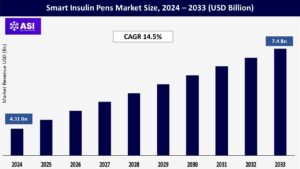
The global smart insulin pens market size was valued at approximately USD 4.31 billion in 2024 and is projected to reach USD 7.4 billion by 2033, demonstrating a compound annual growth rate (CAGR) of 14.5% during the forecast period of 2025–2033.
The smart insulin pens market is growing quickly as more people around the world are diagnosed with diabetes and look for easier, more effective ways to manage their condition. These advanced pens offer greater convenience and connectivity, making daily life a little simpler for those who rely on insulin. While the market is set to keep expanding thanks to ongoing technological innovations and the urgent need for better diabetes care, it still faces challenges like high costs, the need to educate users, and navigating complex regulatory requirements.
One of the biggest reasons this market is growing is simply that more and more people are being diagnosed with diabetes every year. As the number of patients rises, especially those with Type 1 and advanced Type 2 diabetes who need insulin therapy, the demand for reliable ways to deliver insulin naturally increases. Over time, many people with diabetes become dependent on insulin to manage their condition effectively, which further drives the need for convenient delivery options like insulin pens.
One of the biggest challenges in managing diabetes is that many patients struggle to stick to their prescribed insulin routines, which can lead to poor blood sugar control and serious complications over time. Smart insulin pens are designed to help address this problem. They come with helpful features like automatic dose tracking, so patients don’t have to manually log every injection, and reminders to reduce the chances of missed doses.
Many also include dose calculators that use glucose readings and meal information to help determine the right amount of insulin, lowering the risk of errors like taking too much. Some even alert users if insulin has spoiled due to temperature changes. Altogether, these smart features make it easier for patients to manage their condition consistently and safely, leading to better overall blood sugar control and fewer complications a benefit that appeals to both patients and healthcare providers alike.
Despite marketing efforts, many people with diabetes, especially those in less developed regions or older age groups, still aren’t fully aware of what smart insulin pens offer or how they could benefit from switching from traditional methods. For some, especially older adults who aren’t as comfortable with smartphones and apps, the technology can feel intimidating or overly complicated, which makes them hesitant to try it. Others who have been using manual injections for years may feel perfectly comfortable with their current routine and don’t see enough added value to make the switch, especially considering the cost and learning curve.
Even when the devices are designed to be user-friendly, the idea of setting them up, connecting them to apps, and interpreting all the data can seem too complex for certain groups of patients.
Smart insulin pens are considered medical devices, and because of their advanced features, they often fall into higher-risk categories that demand strict testing and clinical validation. Getting approval from major regulatory bodies like the FDA in the U.S., the EMA in Europe, or China’s NMPA is a complex, time-consuming, and costly process. These regulatory hurdles can slow down product launches and make it especially tough for smaller or newer companies to enter the market.
Even after a product is approved, manufacturers must continue monitoring its safety and performance through post-market surveillance, which adds to the overall burden. To complicate things further, each country has its own set of regulations, making it challenging for companies to expand globally without navigating a patchwork of different rules.
| Report Metric | Details |
|---|---|
| Segmentations | |
| By Product Type |
Reusable Smart Insulin Pens Disposable Smart Insulin Pens (Prefilled Smart Pens) Adaptors for Conventional Pens |
| By End User |
Home Care Settings Hospitals & Clinics Ambulatory Surgical Centers / Specialty Diabetes Centers |
| By Connectivity Type |
Bluetooth-Enabled Smart Insulin Pens Near Field Communication (NFC) Smart Insulin Pens USB Connected Smart Insulin Pens Multi-Protocol Solutions |
| By Indication Type |
Type 1 Diabetes Type 2 Diabetes Gestational Diabetes / Other
|
| Key Players |
Novo Nordisk A/S Eli Lilly and Company Sanofi Medtronic plc (acquired Companion Medical, maker of InPen) Ypsomed AG Emperra GmbH E-Health Technologies Bigfoot Biomedical Inc. (acquired by Abbott Laboratories) Jiangsu Delfu Medical Device Co. Ltd. pendiq GmbH Digital Medics Pty Ltd. Cambridge Consultants Ltd. DUKADA SOOIL Developments Co., Ltd. Abbott Laboratories (through its acquisition of Bigfoot Biomedical)
|
| Geographies Covered | |
| North America |
U.S. |
| Europe |
U.K. |
| Asia Pacific |
China |
| Middle East & Africa |
Saudi Arabia |
| Latin America |
Brazil |
The smart insulin market is categorized by product type, by connectivity, by Indication type, and by end-user. Each segment is rapidly evolving, with comprehensive segmental analysis providing a detailed view of the Smart Insulin Pens market, highlighting the specific areas of innovation, consumption patterns, and distribution strategies that define this dynamic industry. Each segment provides a comprehensive understanding of its dynamics and growth opportunities. The Smart Insulin Pens market can be segmented in several ways to provide a comprehensive understanding of its dynamics, target audiences, and areas of growth.
Smart insulin pens generally come in a few different types, each with its own appeal. Reusable smart pens, for example, have an electronic component that you keep using while just swapping out the insulin cartridge when it’s empty. These pens are built to last and often come with advanced features like firmware updates and better integration with health apps. They’re also more environmentally friendly since they generate less plastic waste, and while the upfront cost is higher, they can be more economical over time. It’s no surprise they currently make up the larger share of the market, with models like NovoPen 6, NovoPen Echo Plus, InPen by Medtronic, and the Esysta Pen standing out.
On the other hand, disposable or prefilled smart pens are designed for single use. They come preloaded with insulin and are thrown away once empty. This makes them especially convenient since there’s no need to replace cartridges, and they reduce the risk of infection. They’re often simpler to use, making them appealing for new users or markets where cost and infection control are major concerns. This segment is also expected to grow quickly in the coming years, with products like Eli Lilly’s Tempo Pen leading the way. Lastly, there are smart adaptors or caps that can turn traditional insulin pens into connected devices.
These attachments add features like dose tracking and data logging without requiring users to buy a whole new pen. They’re a more budget-friendly option for people who want the benefits of smart insulin management but prefer to keep using their favorite brands. This segment is growing rapidly, too, as it offers an accessible way to modernize existing insulin delivery methods.
Smart insulin pens can also be divided by how they transfer data, highlighting the different technologies they use to share dosing information. Most popular right now are Bluetooth-enabled pens, which make up the majority of the market. These pens use Bluetooth Low Energy (BLE) to wirelessly sync dose data with a paired smartphone app or other compatible devices. The technology is widely supported, consumes little power, and allows for real-time tracking and even remote monitoring by healthcare providers.
Another approach is Near Field Communication (NFC), where the pen transfers data by simply tapping it against an NFC-enabled smartphone. This method is expected to grow significantly because it’s so easy to use and offers quick, secure transfers over short distances.
Some pens go for an even simpler approach with USB connectivity, letting users plug them directly into a computer to upload data. This option appeals to people who prefer a reliable, no-frills connection and don’t want to rely on smartphones. An example is the Pendiq pen, which has historically used a USB. Finally, there’s a growing interest in multi-protocol pens that support multiple ways of connecting, like Bluetooth, NFC, or even cellular. These flexible solutions are expected to see strong growth as both healthcare providers and payers look for more seamless, hassle-free ways to access and share patient data.
Smart insulin pens can also be grouped based on the type of diabetes they’re mainly designed to help manage, although many models are versatile enough to be used for both Type 1 and Type 2 diabetes. For people with Type 1 diabetes, insulin is essential for survival, requiring lifelong therapy with frequent and carefully timed doses of both basal and bolus insulin. Because of these intensive management needs, this group often represents a substantial share of the market or shows higher adoption rates for smart pens.
These users really benefit from advanced features like precise dose calculators, integration with continuous glucose monitoring (CGM) systems, real-time data sharing with healthcare providers, and customizable alerts to help keep blood sugar levels in a safe range. Type 2 diabetes is more common and accounts for a large portion of the smart insulin pen market, around 68% in 2024, according to some estimates.
Many people with Type 2 diabetes eventually need insulin as the disease progresses, with regimens that can range from a simple once-daily basal dose to multiple daily injections. Pens for this group tend to emphasize ease of use, straightforward dose titration support, and simple integration into routine primary care, making insulin therapy more accessible and less intimidating. Lastly, there’s gestational diabetes and other rarer forms of diabetes that may also require insulin therapy. For these cases, especially during pregnancy, smart pens need to support quick dose adjustments and incorporate extra safety features to protect both mother and baby.
Smart insulin pens are used in a variety of settings, depending on where patients get their care and support. Home care is by far the largest and fastest-growing segment. These pens are designed with patients in mind, making it easier for them to manage their insulin needs on their own, right in the comfort of their daily lives. This growth is fueled by a strong focus on empowering patients, supporting remote monitoring by healthcare providers, and offering the convenience of self-administration outside of traditional clinical environments. Hospitals and clinics also play a big role, accounting for a significant portion of the market, over 40% of revenue in 2024, for example. These settings are often where patients first learn about smart pens, receive training on how to use them properly, or get prescriptions for them.
Hospitals and clinics are central to diabetes care, managing a large number of insulin-dependent patients both during hospital stays and in regular outpatient visits. Lastly, ambulatory surgical centers and specialty diabetes centers focus specifically on diabetes management and education. These facilities often introduce patients to smart insulin pens, offering personalized support and helping them integrate these tools into their ongoing care plans.
The smart insulin pens market is growing at different speeds around the world, shaped by local healthcare systems, access to technology, and how diabetes is managed in each region. North America and Europe are currently leading the way, thanks to their well-developed healthcare infrastructure, strong adoption of new technologies, and supportive reimbursement systems. Meanwhile, the Asia-Pacific is quickly becoming the fastest-growing region, driven by its large and rising number of diabetes patients, along with ongoing economic and healthcare advancements. Though Latin America and the Middle East & Africa currently represent smaller portions of the market, they hold strong potential for future growth as they continue to invest in healthcare and respond to the growing challenge of diabetes across their populations.
North America:
North America currently leads the global smart insulin pens market, holding the largest share of around 41.5% in 2024. Several factors are driving this dominance. First, the region has a high and growing number of people living with diabetes, often linked to rising obesity rates and increasingly sedentary lifestyles. This naturally fuels demand for more effective insulin delivery options.
North America also benefits from an advanced healthcare system with strong infrastructure, high spending, and a focus on cutting-edge care, all of which make it easier to adopt smart technologies. The region is quick to embrace innovations like digital health tools, connected medical devices, and telehealth platforms. Both patients and healthcare providers are generally open to trying new solutions for managing chronic conditions like diabetes. Adding to this momentum is the strong presence of leading medical device and pharmaceutical companies, many of which are based in North America and continue to drive innovation through research and development.
Favorable insurance and reimbursement policies are also helping make smart insulin pens more accessible. The United States stands out as the largest market in the region, thanks to its large diabetic population and high healthcare spending, while Canada also plays a significant role. Key trends include deeper integration with continuous glucose monitoring (CGM) systems, AI-powered insulin dose recommendations, and growing use of data-sharing tools to help healthcare teams tailor treatment more effectively.
Europe
Europe is the second-largest market for smart insulin pens worldwide and is expected to see steady growth over the coming years. Valued at around USD 109 million in 2024, the market is projected to more than double to USD 223 million by 2030, growing at a healthy annual rate of about 12%. Several factors are driving this expansion. Europe has a large and aging population, which contributes to a higher prevalence of diabetes and a growing need for reliable insulin therapy. The overall burden of diabetes in the region ensures sustained demand for effective management tools like smart pens. Europe’s strong public and private healthcare systems, along with supportive government initiatives, also encourage the adoption of advanced digital health technologies.
Many countries are investing in modernizing their healthcare infrastructure, integrating electronic health records (EHRs) and telemedicine platforms, which makes it easier to incorporate smart insulin pens into routine care. The region is home to numerous innovative pharmaceutical and medical device companies that continue to drive research, development, and commercialization of these advanced devices. Among European countries, Germany stands out with the highest market share, thanks to its large diabetic population and early adoption of cutting-edge medical technologies. The UK and France are also key contributors to market growth. However, the relatively high cost of smart insulin pens compared to traditional options can still be a barrier in some countries, especially where reimbursement policies vary widely.
Asia-Pacific:
The Asia-Pacific region is emerging as the fastest-growing market for smart insulin pens. While exact growth rates for smart pens may vary, the broader insulin pen market in this region is expected to grow at a strong pace, around 8.8% annually from 2024 to 2030, with smart pens playing a major role in that momentum. A key driver behind this growth is the region’s enormous and rapidly increasing diabetic population, especially in countries like China and India, where urbanization, lifestyle changes, and rising obesity rates are fueling a surge in diabetes cases.
This large patient base offers tremendous potential for smart insulin pen adoption. As economies in the region continue to grow, more people are gaining the financial means to afford advanced healthcare tools, including connected insulin devices. Healthcare infrastructure is also steadily improving, with both government and private investment going into modernizing facilities and promoting digital health. At the same time, awareness is rising both among the public and healthcare professionals about the importance of effective diabetes management and how new technologies like smart pens can make a difference. Local innovation is helping, too.
Countries like China are seeing increased R&D activity and the rise of local manufacturers, which is boosting product availability and supporting growth. China is expected to lead the region due to its massive population and diabetes burden, while India is close behind, showing strong growth potential. Meanwhile, Japan and South Korea represent more mature, tech-savvy markets that are already well-positioned for adoption. That said, affordability remains a challenge for many people in the region, and in some areas, fragmented or underdeveloped healthcare systems can make it harder to implement and scale these technologies widely.
Middle East & Africa (MEA)
The Middle East and Africa (MEA) region represents a developing but promising market for smart insulin pens. The broader insulin pen market in MEA is projected to grow steadily, reaching around USD 380.9 million by 2030, with an annual growth rate of about 6.3% from 2024 to 2030. A major driver of this growth is the region’s high incidence of diabetes. Several MEA countries have some of the world’s highest diabetes rates, often linked to lifestyle factors such as diet, urbanization, and reduced physical activity.
To address this, many governments, particularly in Gulf Cooperation Council (GCC) countries, are investing heavily in modernizing their healthcare systems and rolling out digital health initiatives, making advanced treatments more accessible. Rising disposable incomes in wealthier parts of the Middle East also mean more people can afford sophisticated medical devices, including smart insulin pens. At the same time, there’s growing awareness among patients and healthcare professionals about the importance of good diabetes management and the advantages that newer technologies can bring.
Key markets in the region include Saudi Arabia and the UAE, where high diabetes rates, strong healthcare spending, and a push for health tourism are fueling adoption. In Africa, South Africa stands out as an important market. However, the region still faces challenges. Political instability in certain areas, uneven access to quality healthcare, and the relatively high cost of smart insulin pens can limit their use, especially in less affluent countries.
The market was valued at USD 4.31 billion in 2024.
The market is projected to grow at a CAGR of 14.5% from 2025 to 2033.
Bluetooth segment holds the largest market share.
Asia-Pacific region is expected to witness the highest growth rate.
Major players include Novo Nordisk, Medtronic, and Eli Lilly and Company.
1.1 Summary
1.2 Research methodology
2.1 Research Objectives
2.2 Market Definition
2.3 Limitations & Assumptions
2.4 Market Scope & Segmentation
2.5 Currency & Pricing Considered
3.1 Drivers
3.2 Geopolitical Impact
3.3 Human Factors
3.4 Technology Factors
4.1 Porters Five Forces Analysis
4.2 Value Chain Analysis
4.3 Average Pricing Analysis
4.4 M & A, Agreements & Collaboration Analysis
5.1 Smart Insulin Pens Market , By Product Type
5.1.1 Introduction
5.1.2 Market Size & Forecast
5.2 Smart Insulin Pens Market, By End User
5.3 Smart Insulin Pens Market,By Connectivity Type
5.4 Smart Insulin Pens Market,By Indication Type
5.1 North America Smart Insulin Pens Market, By Country
6.1.1 Smart Insulin Pens Market , By Product Type
6.1.2 Smart Insulin Pens Market, By End User
6.1.3 Smart Insulin Pens Market,By Connectivity Type
6.1.4 Smart Insulin Pens Market,By Indication Type
6.2 U.S.
6.2.1 Smart Insulin Pens Market , By Product Type
6.2.2 Smart Insulin Pens Market, By End User
6.2.3 Smart Insulin Pens Market,By Connectivity Type
6.2.4 Smart Insulin Pens Market,By Indication Type
6.3 Canada
7.1 U.K.
7.2 Germany
7.3 France
7.4 Spain
7.5 Italy
7.6 Russia
7.7 Nordic
7.8 Benelux
7.9 The Rest of Europe
8.1 China
8.2 South Korea
8.3 Japan
8.4 India
8.5 Australia
8.6 Taiwan
8.7 South East Asia
8.8 The Rest of Asia-Pacific
9.1 UAE
9.2 Turkey
9.3 Saudi Arabia
9.4 South Africa
9.5 Egypt
9.6 Nigeria
9.7 Rest of MEA
10.1 Brazil
10.2 Mexico
10.3 Argentina
10.4 Chile
10.5 Colombia
10.6 Rest of Latin America
11.1 Global Market Share (%) By Players
11.2 Market Ranking By Revenue for Players
11.3 Competitive Dashboard
11.4 Product Mapping