

Breast Pump Market
Breast Pump Market Share & Trends Analysis Report, By Product Type (Closed-System Breast Pumps, Open-System Breast Pumps), By Technology Type (Electric Breast Pumps, Single Electric Pumps, Double Electric Pumps, Battery-Powered Breast Pumps, Manual Breast Pumps), By End-User (Personal/Home-Use Pumps, Hospital-Grade Pumps), Distribution Channel (Offline/Retail, Online/E-commerce)– Industry Analysis Report, Regional Outlook, Growth Potential, Price Trends, Competitive Market Share & Forecast, 2025–2033

Historical Period: 2019-2024
Forecast Period: 2025-2033
Report Code :
CAGR: 8.6%
Last Updated : June 30, 2026
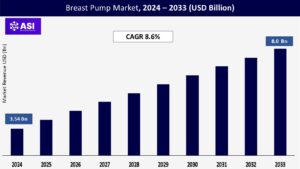
The global Breast Pump Market size was valued at approximately USD 3.54 billion in 2024 and is projected to reach USD 8.0 billion by 2033, demonstrating a compound annual growth rate (CAGR) of 8.6% during the forecast period of 2025–2033.
The breast pump market is currently experiencing strong momentum and is expected to see continued expansion from 2024 through 2033. This growth is being fueled by a dynamic mix of social, economic, and technological changes that are reshaping the way mothers approach infant care.
Increasing participation of women in the workforce is creating a greater need for practical and efficient breastfeeding solutions, while rising awareness about the health benefits of breast milk is encouraging more mothers to continue breastfeeding for longer periods even after returning to work.
Economically, growing disposable incomes, especially in emerging markets, are making breast pumps more accessible to a wider audience. At the same time, rapid technological advancements such as the development of wearable, smart, and battery-powered pumps are making the pumping experience more convenient, discreet, and user-friendly.
Together, these factors are not only driving demand but also transforming breast pumps from niche products into essential parenting tools for millions of families around the world.
One of the most powerful forces driving the global breast pump market is the growing participation of women in the workforce. As more women continue to pursue careers and return to work after childbirth, the need for practical solutions that support breastfeeding has become increasingly important. Breast pumps offer a vital bridge between professional responsibilities and the desire to provide the best nutrition for infants.
By enabling mothers to express and store breast milk, pumps help them maintain their milk supply and ensure that their babies continue to receive the many health benefits of breast milk even when they’re away from home. This balance between work and motherhood is no longer a luxury but a necessity for many families, making breast pumps an essential tool for modern parenting.
The convenience, flexibility, and support these devices offer are at the heart of their growing demand, especially in urban environments and among working mothers who want to stay connected to their child’s nutrition, even from a distance.
The breast pump industry has evolved significantly over the years, driven by continuous innovation aimed at making the breastfeeding journey easier, more efficient, and more aligned with the realities of modern life. What began with basic manual pumps has now advanced into a wide range of high-tech options designed to meet the diverse needs of today’s mothers.
Electric and battery-powered pumps have become increasingly popular, offering features like adjustable suction levels and multiple expression settings that make pumping faster, more comfortable, and more personalized.
One of the most notable advancements is the rise of wearable and hands-free pumps sleek, portable devices that fit inside a bra, allowing mothers to express milk while on the move or multitasking at home or work. These innovations cater to the fast-paced lifestyles of many parents today.
Adding to this momentum is the growing popularity of smart breast pumps that connect with mobile apps. These smart breast devices not only help mothers track their pumping sessions and monitor milk output but also provide insights into patterns and supply management, empowering them to take greater control over their breastfeeding routines.
Together, these technologies reflect a shift toward more user-friendly, discreet, and data-driven solutions that support mothers throughout their breastfeeding journey.
Despite the growing demand for breast pumps and the steady stream of technological innovations in the market, affordability remains a major barrier for many families particularly in developing regions. Advanced breast pumps, such as hospital-grade, wearable, and app-connected smart models, offer clear benefits in terms of convenience, efficiency, and ease of use.
However, these benefits often come with a steep price tag. For many low- and middle-income families, especially in emerging markets, the cost of these high-end devices puts them out of reach, limiting access to only a small portion of the population.
Compounding the issue is the lack of reimbursement support in many parts of the world. While countries like the United States offer insurance coverage for breast pumps under policies like the Affordable Care Act, most other regions require consumers to pay the full cost out-of-pocket.
This makes the purchase of a breast pump a significant financial burden for many, particularly for those already navigating the high costs associated with childbirth and infant care. As a result, the very tools designed to support working mothers and promote breastfeeding are often inaccessible to those who could benefit from them the most.
In many developing regions, one of the key challenges facing the breast pump industry is a widespread lack of awareness and understanding. For many families, breastfeeding is seen purely as a natural process, and the idea of using a mechanical device to assist with it may seem unnecessary or even confusing. This limited awareness often means that mothers are simply not introduced to breast pumps as a viable option, even when they could benefit from the flexibility and support these tools provide.
Beyond the knowledge gap, cultural perceptions also play a significant role. In some societies, using a breast pump may carry a social stigma, with the practice seen as unnatural or even shameful. Mothers may feel embarrassed to use a pump, especially in public settings or at the workplace, which can discourage them from considering it at all.
These cultural and societal barriers create an environment where modern breastfeeding solutions struggle to gain acceptance, highlighting the need for more education, community support, and normalization around the use of breast pumps.
| Report Metric | Details |
|---|---|
| Segmentations | |
| By Product Type |
Closed-System Breast Pumps Open-System Breast Pumps |
| By Technology Type |
Electric Breast Pumps Single Electric Pumps Double Electric Pumps Battery-Powered Breast Pumps Manual Breast Pumps |
| By End- User Type |
Personal/Home-Use Pumps Hospital-Grade Pumps |
| By Distribution Type |
Offline/Retail, Online/E-commerce Home-Care Settings |
| Key Players |
|
| Geographies Covered | |
| North America |
U.S. |
| Europe |
U.K. |
| Asia Pacific |
China |
| Middle East & Africa |
Saudi Arabia |
| Latin America |
Brazil |
The Breast Pump Market is categorized by product type, by technology, by end-user, and by distribution channel. Each segment is rapidly evolving, with different areas of the industry growing at their own pace and shifting in how much of the market they represent.
Each segment provides a comprehensive understanding of its dynamics and growth opportunities. The breast pump industry is a dynamic and growing industry that can be segmented in various ways to understand its different facets.
When choosing a breast pump, hygiene and design play a crucial role in decision-making. Closed-system breast pumps have become the preferred choice for many parents, largely because of their superior hygiene features.
These pumps include a barrier typically a backflow protector that prevents breast milk from entering the tubing or motor. This design helps reduce the risk of contamination and makes cleaning much simpler, offering peace of mind to users.
On the other hand, open-system pumps, which do not have this protective barrier, tend to be more budget-friendly but come with a higher risk of milk exposure to internal components. This makes them harder to clean and less suitable for sharing between users, limiting their appeal for families prioritizing cleanliness and safety.
Breast pumps are primarily segmented based on their functionality and the overall experience they offer to users. Electric breast pumps lead the market, favored for their speed and ease of use. Powered by a motor, these pumps create consistent suction, allowing for quicker and more efficient milk expression.
Within this category, single electric pumps are designed for use on one breast at a time, while double electric pumps enable simultaneous pumping from both breasts saving time and often helping to boost milk production.
Battery-powered breast pumps are gaining popularity, especially among working mothers and those with active lifestyles, thanks to their portability and ability to function without a constant power outlet.
Meanwhile, manual breast pumps offer a simpler, quieter, and more budget-friendly option. Operated by hand, they are ideal for occasional use or for mothers in price-sensitive regions looking for a compact and discreet solution.
Breast pumps can also be categorized based on where and how they are used, which directly impacts user convenience and performance needs. The largest segment comprises personal or home-use pumps—devices typically purchased by individuals for everyday use at home, at work, or while traveling.
This segment has seen strong growth, especially with the rising number of working mothers seeking practical, flexible solutions. A key highlight within this category is the emergence of wearable breast pumps, which are gaining popularity for their discreet, hands-free design that fits seamlessly into busy lifestyles.
On the other hand, hospital-grade pumps are designed for professional, multi-user settings such as hospitals and birthing centers. These pumps are more powerful, durable, and efficient, making them suitable for mothers facing challenges such as low milk supply or those with premature infants.
While primarily used in clinical environments, many hospital-grade pumps are also available for rental, offering a high-performance option for personal use when needed.
Breast pumps are available through a variety of purchasing channels, each catering to different consumer preferences. Traditionally, many parents have turned to offline retail options—such as pharmacies, baby specialty stores, and large hypermarkets—where they can see products in person, ask questions, and get immediate access to what they need.
However, the online or e-commerce segment has been growing rapidly, driven by the convenience of shopping from home, access to a wider range of brands and models, and often more competitive pricing.
With detailed product reviews, flexible return policies, and doorstep delivery, online platforms are becoming the go-to choice for many modern parents looking for both ease and value.
North America, led by the United States, dominates the global breast pump market, accounting for around 40% of the total breast pump market share in 2024, a trend expected to continue in the coming years. This strong position is driven by several key factors.
High female workforce participation means many mothers return to work soon after childbirth, increasing the need for reliable and efficient breast pumping solutions.
Supportive policies also play a big role; under the Affordable Care Act (ACA), most health insurance plans in the U.S. are required to cover the cost of a breast pump, making them more accessible to a wider range of families.
The region is also known for being a center of innovation, with rapid advancements in smart, wearable, and hands-free pumping technologies. Additionally, North America benefits from a well-developed healthcare system that offers access to lactation consultants and other maternal health services, further supporting the widespread use of breast pumps.
Europe represents a mature yet steadily growing breast pump market, holding the second-largest breast pump market share globally after North America. This consistent growth is fueled by several important factors. High maternal employment rates, particularly in Western European countries like Germany and the UK, drive strong demand for efficient and user-friendly pumping solutions.
European consumers also place a high value on hygiene and safety, favoring closed-system breast pumps for their cleanliness and reduced risk of contamination.
The region is also quick to embrace technological innovation, with increasing interest in electric, smart, and portable pumps that offer greater convenience and discretion.
Additionally, supportive government policies, including generous maternity leave and public health campaigns that promote breastfeeding, create a positive environment for continued market expansion.
The Asia-Pacific region is emerging as the fastest-growing market for breast pumps, with strong growth projected from 2024 through 2033. This surge is driven by a combination of powerful demographic and economic trends. Countries like China and India, with their large and expanding populations, offer an immense consumer base.
As disposable incomes rise across the region, breast pumps are becoming more affordable and accessible to a broader segment of families.
Awareness is also on the rise, thanks to government campaigns and healthcare initiatives that highlight the benefits of breastfeeding and provide education on maternal health. At the same time, improvements in healthcare infrastructure—particularly the growth of private hospitals and clinics—are making breast pumps more available and accepted, further fueling demand across urban and semi-urban areas.
The breast pump market in this region is still developing but shows promising, niche growth driven by a few key trends. Rising awareness around maternal and infant health is encouraging more mothers to explore breastfeeding support tools, including breast pumps. Government-led initiatives and the establishment of human milk banks in some areas are also helping to increase demand.
However, the market still faces notable challenges. High product costs, limited awareness in certain communities, and deeply rooted cultural or traditional beliefs can slow adoption. That said, as economic conditions improve and healthcare infrastructure continues to expand, the region is expected to experience steady, long-term growth, opening up new opportunities for both consumers and manufacturers.
The breast pump market was valued at USD 21.4 billion in 2024.
The breast pump market is projected to grow at a CAGR of 8.6% from 2025 to 2033.
The electric breast pump segment holds the largest breast pump market share.
Asia-Pacific region is expected to witness the highest growth rate.
Major players include Medela AG, Philips, Ameda, Lansinoh Laboratories, and Spectra Baby USA.
1.1 Summary
1.2 Research methodology
2.1 Particulate Adjuvants
2.2 Aluminum-Based Adjuvants
2.3 Toll- Like Receptor Agonists
3.1 Drivers
3.2 Geopolitical Impact
3.3 Human Factors
3.4 Technology Factors
4.1 Porters Five Forces Analysis
4.2 Value Chain Analysis
4.3 Average Pricing Analysis
4.4 M & A, Agreements & Collaboration Analysis
5.1 Breast Pump Market , By Product Type
5.1.1 Introduction
5.1.2 Market Size & Forecast
5.2 Breast Pump Market , By Technology Type
5.3 Breast Pump Market , By End-User Type
5.4 Breast Pump Market , By Distribution Type
6.1 North America Breast Pump Market , By Country
6.1.1 Breast Pump Market , By Product Type
6.1.2 Breast Pump Market , By Technology Type
6.1.3 Breast Pump Market , By End-User Type
6.1.4 Breast Pump Market , By Distribution Type
6.2 U.S.
6.2.1 Breast Pump Market , By Product Type
6.2.2 Breast Pump Market , By Technology Type
6.2.3 Breast Pump Market , By End-User Type
6.2.4 Breast Pump Market , By Distribution Type
6.3 Canada
7.1 U.K.
7.2 Germany
7.3 France
7.4 Spain
7.5 Italy
7.6 Russia
7.7 Nordic
7.8 Benelux
7.9 The Rest of Europe
8.1 China
8.2 South Korea
8.3 Japan
8.4 India
8.5 Australia
8.6 Taiwan
8.7 South East Asia
8.8 The Rest of Asia-Pacific
9.1 UAE
9.2 Turkey
9.3 Saudi Arabia
9.4 South Africa
9.5 Egypt
9.6 Nigeria
9.7 Rest of MEA
10.1 Brazil
10.2 Mexico
10.3 Argentina
10.4 Chile
10.5 Colombia
10.6 Rest of Latin America
11.1 Global Market Share (%) By Players
11.2 Market Ranking By Revenue for Players
11.3 Competitive Dashboard
11.4 Product Mapping